Forgiven Script: An Elegant Calligraphy Typeface for Small Business Branding
Two weeks ago, I held a freshly printed batch of candle labels in my hands—soft kraft paper, minimalist layout, and a handwritten font that just… didn’t feel like *us*. It was too wobbly for consistency, too thin to hold up on jar sleeves, and lacked the warmth our customers kept mentioning in reviews: “feels like it was made just for me.” That’s when I swapped in Forgiven Script. Instantly, the labels looked intentional—not trendy, not forced, but quietly confident. Like the brand had finally learned how to introduce itself properly.
Forgiven Script for Wedding Invitations and Elegant Branding
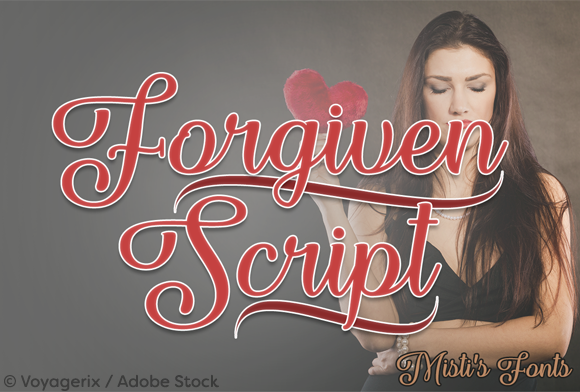
Forgiven Script is a Script Handwritten typeface with graceful curves, delicate entry and exit strokes, and those signature underline swashes—subtle flourishes that add movement without clutter. It’s not overly ornate, which makes it perfect for small businesses wanting elegance without pretension. Whether you’re designing wedding invitations for a local stationer or reimagining your boutique’s gift tags, Forgiven Script brings a hand-crafted sincerity that feels personal and polished at once. Because it’s a premium font built for real-world use, it scales beautifully—from tiny RSVP cards to oversized ceremony signage—and maintains its charm across print and digital formats.
Forgiven Script for Café Menus and Local Business Signage
My neighbor’s café just updated their chalkboard-style menu board using Forgiven Script for dish names and a clean sans serif for descriptions. The contrast works because Forgiven Script shines brightest as display text—not body copy. It’s ideal for café menus, bakery chalkboards, farmers’ market banners, or even laminated table tents. Since it’s a Script Handwritten font, it invites pause and attention, making specials feel special and seasonal items feel intentional. Just avoid cramming long paragraphs into it; instead, use it for headers, section dividers, or accent lines—like “Honey Lavender Scone” or “Locally Roasted Daily.” For readability on mobile menus or printed takeout flyers, stick to sizes 18pt and up, and always test print on your actual paper stock.
Forgiven Script for Book Covers and Creative Product Packaging
If you’re self-publishing a memoir, launching a poetry chapbook, or packaging handmade soaps with literary flair, Forgiven Script adds instant editorial sophistication. As a Fonts choice, it bridges the gap between artisanal and professional—no stock “handwritten” look here. Its underline swashes give book titles subtle motion, while its balanced letterforms ensure legibility at thumbnail size (critical for Amazon or Etsy listings). I’ve seen it work beautifully on linen-wrapped journals, soy wax candle boxes, and even embroidered tote bags where the font was digitized from the original vector outlines. Pro tip: Always check the included file formats—OTF and TTF are standard, but some versions include stylistic alternates or ligatures that let you swap in more elegant ‘f’ or ‘t’ forms for refined typographic control.
Forgiven Script for Logos and Small Business Identity Systems
Your logo is often the first thing people see—and the last thing they remember. That’s why Forgiven Script has become my go-to for logo design when clients want approachable luxury: think skincare brands with botanical names, floral studios, or home-based coaching services. As a Script Handwritten typeface, it conveys care and individuality—but only if used thoughtfully. Pair it with a neutral sans serif (like Montserrat or Inter) for taglines or website navigation, and you instantly create visual hierarchy and balance. Avoid pairing it with other scripts or decorative fonts—that’s where things get noisy. And yes, Forgiven Script is licensed for commercial use, meaning you can confidently use it on product labels, Shopify banners, Instagram story templates, and client deliverables without worry.
Forgiven Script for Social Media Graphics and Digital Brand Consistency
Scrolling through Instagram last month, I noticed something: the accounts I trusted most—the ones with steady engagement and warm comments—all shared one quiet detail: consistent typography. Not identical fonts everywhere, but a clear rhythm. That’s where Forgiven Script fits in. Use it for quote graphics, limited-edition launch announcements, or even your Instagram highlight covers. Its underline swashes make phrases like “New Arrivals” or “Hand-Poured Weekly” feel considered—not automated. Since it’s a Fonts asset designed for versatility, it renders cleanly on mobile screens and holds up in compressed JPEGs. Just keep line length short (under 40 characters per line), use generous spacing, and always preview in both light and dark mode.
Forgiven Script for Thank-You Cards and Customer Experience Touchpoints
The little things build loyalty. A handwritten note tucked into a shipping box. A custom sticker sealing an order. A thank-you card with just your name and a heart drawn beneath it. That’s where Forgiven Script becomes more than typography—it becomes tone of voice. As a Script Handwritten font, it mirrors the sincerity of a real signature. I recently used it for a set of printable thank-you cards for a ceramicist client; she reported customers keeping them on fridges and framing them. Why? Because Forgiven Script doesn’t shout. It leans in. It says, “I made this for you,” without saying a word. For best results on small-print items like stickers or tags, stick to bold weight variants (if available) and avoid ultra-thin swashes that might disappear in offset printing or laser engraving.
How to Get Started With Forgiven Script Today
Download Forgiven Script as a Fonts package—you’ll typically receive OTF, TTF, and sometimes web-ready WOFF files. Install it in your design apps (Canva, Illustrator, Photoshop, Affinity), then start small: refresh one customer-facing item first—your email signature, your Etsy shop banner, or your next batch of product labels. Notice how much faster people recognize your brand. How often they comment on the “beautiful” font. How much more cohesive your visuals feel—not because everything looks the same, but because everything feels like it belongs to the same thoughtful, human-centered story.