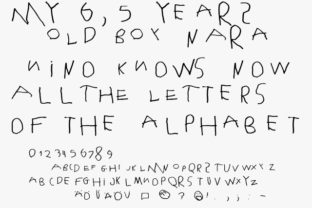
Comely Dulcet Script Handwritten Font for Makers
It started with a candle label—just one small 2" x 3" rectangle of kraft paper, waiting for something that felt *true*. Not generic. Not overly ornate. Just quietly elegant, like handwriting you’d find tucked into a thank-you note from a friend who knows your taste. That’s when I opened Comely Dulcet, and everything clicked: this Script Handwritten font wasn’t just another download—it was the gentle, personal voice my handmade goods had been missing.
Comely Dulcet for Candle Labels and Handmade Product Packaging
Comely Dulcet shines brightest where intimacy matters most—on candle labels, soap tags, jar seals, and boutique packaging. Its thin, flowing strokes carry warmth without fragility; it reads clearly at 10–14 pt on matte sticker paper, and holds its grace even when scaled down to 8 pt for tiny tea bag tags. Because Comely Dulcet is a Script Handwritten font built for authenticity—not flash—it never competes with your product’s texture or scent. It supports. It whispers “hand-poured,” “small-batch,” “made with care.” When paired with a clean sans serif (like Montserrat Light or Poppins Regular) for ingredients or origin details, the contrast feels intentional, not accidental. Always test cut files in Cricut Design Space or Silhouette Studio first—the delicate terminals and fine hairlines render beautifully in SVG, but avoid ultra-thin outlines under 0.25 pt for physical die-cutting.
Comely Dulcet for Greeting Cards and Seasonal Printable Templates
I designed a set of autumn greeting cards last October—warm-toned kraft cardstock, pressed maple leaves, and soft watercolor borders—and tried three different scripts before landing on Comely Dulcet. Its subtle rhythm and natural entry/exit strokes made phrases like “With Gratitude” and “Warmest Wishes” feel handwritten, not templated. As a Script Handwritten font, Comely Dulcet works best for headlines, names, short sentiments, and decorative accents—not body text—but that’s exactly what printable creators need: a premium font that elevates the emotional weight of a single line. For digital downloads, I use Comely Dulcet in layered PSD mockups (title + shadow + texture overlay) so buyers instantly see how it integrates with real stationery. Bonus: the included OpenType ligatures add quiet polish to words like “love,” “forever,” and “joy”—no extra work, just refined charm.
Comely Dulcet for Wedding Invitations and Elegant Branding
When a client asked for “timeless but not traditional” wedding stationery, I reached for Comely Dulcet—not as the sole typeface, but as the soul of the suite. Used for names, dates, and ceremony details on ivory cotton paper, it brought soft authority and quiet romance. Paired with a restrained serif like Playfair Display for addresses and RSVPs, Comely Dulcet became the heartbeat beneath every piece: welcome signs, menu cards, place settings, even monogrammed napkin stamps. As a Script Handwritten font, it avoids looking like calligraphy software—it has the slight variation and human breath that makes guests pause and smile. Just remember: for laser printing or foil stamping, stick to 16–24 pt minimum for optimal clarity, and always embed fonts in PDFs before sending to print vendors.
Comely Dulcet for Planner Pages and Digital Printables
In my weekly planner templates, Comely Dulcet lives in the margins—not shouting, but anchoring. A delicate “Monday” header. A tiny “Focus” beside a goal tracker. A looping “Breathe” in the self-care section. Because Comely Dulcet is a Script Handwritten font with graceful spacing and open counters, it stays legible even when shrunk to fit narrow columns or printed at home on standard copy paper. I avoid using it for full-page journal prompts (too light), but for titles, dividers, and decorative headers? Pure magic. When bundling digital printables, I include both OTF and TTF versions so users on Mac, Windows, or Canva can access Comely Dulcet seamlessly—and always confirm commercial licensing covers resale of editable templates (it does, for this Fonts release).
Comely Dulcet for Stickers, Tote Bags, and Boutique Tags
Last spring, I tested Comely Dulcet on a batch of 3" vinyl stickers—“Good Vibes Only,” “Made With Love,” “Find Your Calm.” Printed on glossy white, the thin strokes held crispness; on matte kraft, they softened just enough to feel artisanal. Same with cotton tote bags: heat-pressed with Comely Dulcet in charcoal gray, the script looked hand-embroidered from five feet away. The key? Use vector outlines (not raster) and increase stroke weight slightly in Illustrator if applying to textured surfaces. As a Script Handwritten font, Comely Dulcet thrives in display roles—so reserve it for focal phrases, not fine print. And yes—it pairs beautifully with bold, friendly sans serifs (think Quicksand Bold or Nunito ExtraBold) for contrast that pops on Instagram listings and Etsy banners.
Comely Dulcet for Wall Art Prints and Farmhouse Signs
I framed a simple 8x10 print with just three words: “Gather. Grow. Glow.” in Comely Dulcet, centered on cream linen-textured paper. No embellishment. No border. Just the quiet confidence of a Script Handwritten font that trusts its own shape. That’s the power of Comely Dulcet: it doesn’t need flourishes to feel special. For wooden farmhouse signs or chalkboard-style wall art, I scale it generously (36–72 pt), adjust letter-spacing by +20–40 for airiness, and sometimes layer a whisper-thin drop shadow to lift it off the background. Because Comely Dulcet is a Fonts asset designed for emotional resonance—not technical complexity—it invites slower looking, deeper feeling, and quieter pride in the things we make.